


Water Quality
How to Balance Aquarium Water Quality Parameters
Jan
Maintaining balanced water quality in an aquarium is crucial for the health of your aquatic pets and the overall ecosystem. Water parameters like pH, temperature, ammonia, nitrites, nitrates, and dissolved oxygen directly affect the well-being of your fish and plants. In this guide, we’ll explore essential water quality parameters, how to test them, and practical tips for achieving and maintaining balance.
Why Water Quality Matters
Healthy water quality ensures that your fish thrive in a stress-free environment. Poor water conditions can lead to diseases, reduced lifespan, and even fatalities. Moreover, balanced water quality supports plant growth and prevents the buildup of harmful substances.
Key Aquarium Water Quality Parameters
1. pH (Potential Hydrogen):
- Definition: Measures the acidity or alkalinity of water.
- Optimal Range:
- Freshwater: 6.5–7.5
- Saltwater: 7.8–8.4
- Importance: pH affects fish metabolism and stress levels. Sudden fluctuations can be harmful.
2. Temperature:
- Optimal Range:
- Tropical fish: 75°F–80°F (24°C–27°C)
- Coldwater fish: 60°F–72°F (15°C–22°C)
- Importance: Consistent temperature is critical. Sudden changes can stress fish and weaken their immune system.
3. Ammonia (NH3):
- Optimal Level: 0 ppm (parts per million)
- Importance: Ammonia is toxic to fish and is a byproduct of waste, uneaten food, and decaying matter.
4. Nitrites (NO2):
- Optimal Level: 0 ppm
- Importance: Nitrites are harmful byproducts of the nitrogen cycle. Prolonged exposure can damage fish gills.
5. Nitrates (NO3):
- Optimal Level: Below 20 ppm for freshwater tanks, below 40 ppm for saltwater tanks.
- Importance: High nitrate levels encourage algae growth and stress fish.
6. Dissolved Oxygen (DO):
- Optimal Level: 5–7 mg/L
- Importance: Adequate oxygen levels are vital for fish respiration and the breakdown of organic matter.
7. Hardness (GH and KH):
- General Hardness (GH): Measures calcium and magnesium levels, affecting fish health.
- Carbonate Hardness (KH): Stabilizes pH levels.
How to Test Water Quality
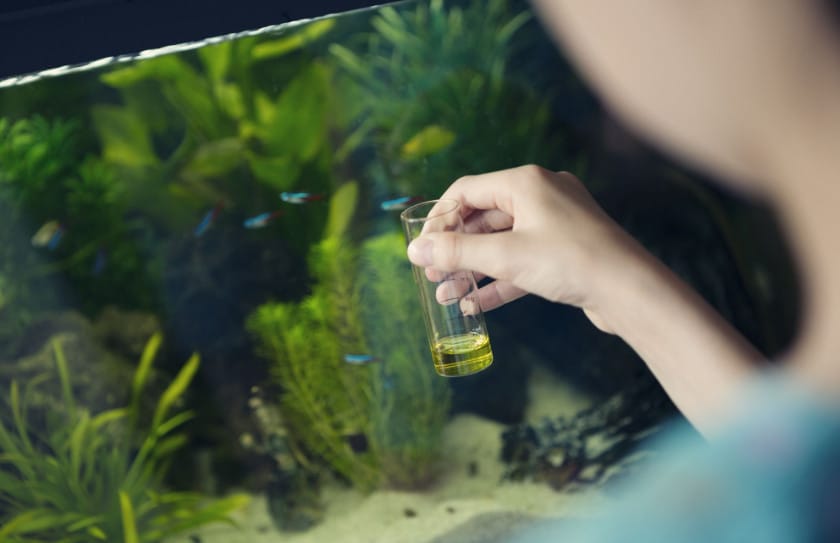
Regular water testing is essential for monitoring and maintaining water parameters.
1. Test Kits:
- Use liquid test kits or test strips to measure pH, ammonia, nitrites, nitrates, and hardness.
- Digital meters provide precise readings for pH and temperature.
2. Frequency:
- Test weekly for new setups.
- Test bi-weekly or monthly for established tanks.
3. Observational Indicators:
- Cloudy water, algae overgrowth, or fish gasping at the surface signal poor water quality.
How to Balance Aquarium Water Parameters
1. Adjusting pH:
- To Increase pH: Add crushed coral, limestone, or a pH buffer.
- To Decrease pH: Use driftwood, peat moss, or commercial pH reducers.
- Tip: Always adjust pH gradually to avoid stressing fish.
2. Maintaining Temperature:
- Use a reliable aquarium heater for tropical tanks.
- For cooling, use a chiller or ensure the tank is away from direct sunlight.
3. Controlling Ammonia Levels:
- Remove uneaten food and decaying matter promptly.
- Perform regular water changes (10-20% weekly).
- Use biological filters to promote beneficial bacteria growth.
4. Reducing Nitrites and Nitrates:
- Ensure the nitrogen cycle is established.
- Add live plants to absorb nitrates. Explore our collection of live plants for a natural solution.
- Avoid overstocking and overfeeding fish.
5. Boosting Oxygen Levels:
- Increase surface agitation with air stones or powerheads.
- Avoid overcrowding to reduce oxygen demand.
6. Managing Hardness:
- For softer water, use RO (reverse osmosis) water.
- To increase hardness, add crushed coral or mineral additives.
The Role of Live Plants in Maintaining Water Quality
Live plants not only enhance the aesthetics of your aquarium but also play a significant role in maintaining water quality:
- Oxygenation: Plants produce oxygen during photosynthesis.
- Nitrate Absorption: Plants utilize nitrates as nutrients.
- Filtration: Plants trap debris and provide surface areas for beneficial bacteria.
Browse our range of live plants to find suitable options for your aquarium.
Common Water Quality Issues and Solutions
1. Cloudy Water:
- Cause: Excess debris, overfeeding, or bacterial bloom.
- Solution: Reduce feeding, perform a water change, and clean the filter.
2. Algae Overgrowth:
- Cause: High nitrate and phosphate levels or excessive light.
- Solution: Limit light exposure to 8–10 hours daily, add algae-eating fish, and perform regular water changes.
3. Fish Gasping at Surface:
- Cause: Low dissolved oxygen levels.
- Solution: Increase aeration with air stones or a power filter.
4. Ammonia Spikes:
- Cause: Overfeeding, overcrowding, or new tank syndrome.
- Solution: Conduct water changes and use ammonia-neutralizing products.
Preventive Measures for Long-Term Water Quality
1. Regular Maintenance:
- Replace 10-20% of the water weekly to remove accumulated toxins.
- Clean filters every 2-4 weeks using tank water to preserve beneficial bacteria.
2. Feed Responsibly:
- Feed your fish once or twice a day, offering only what they can consume in 2-3 minutes.
- Consider high-quality live food for balanced nutrition.
3. Use a Reliable Filter System:
- Invest in a multi-stage filter to handle mechanical, biological, and chemical filtration. Explore our aquariums and filtration solutions to find the perfect setup.
4. Monitor Stocking Levels:
- Avoid overcrowding to reduce stress and maintain water quality.
- Follow the rule of thumb: 1 inch of fish per gallon of water.
Conclusion
Balancing aquarium water quality parameters is a continuous process that requires diligence, proper equipment, and understanding of your aquatic ecosystem. By monitoring key water parameters, performing regular maintenance, and using live plants, you can create a healthy, thriving environment for your fish and plants.
Ready to achieve optimal water quality? Visit Aquarium Fish Online for premium live fish, plants, and water conditioners to ensure your aquarium’s success.
